
TALREN v6
Stability analysis of geotechnical structures
Natural slopes, embankments, dams and dykes, gravity walls, reinforced soil structures, nailed walls and tensioned screens.
Sales brochure
Talren is a software programme designed to analyse the stability of geotechnical structures, with or without reinforcement systems: natural slopes, embankments, dams and dykes, gravity walls, reinforced earth structures, nailed walls and tensioned screens.
Key strengths
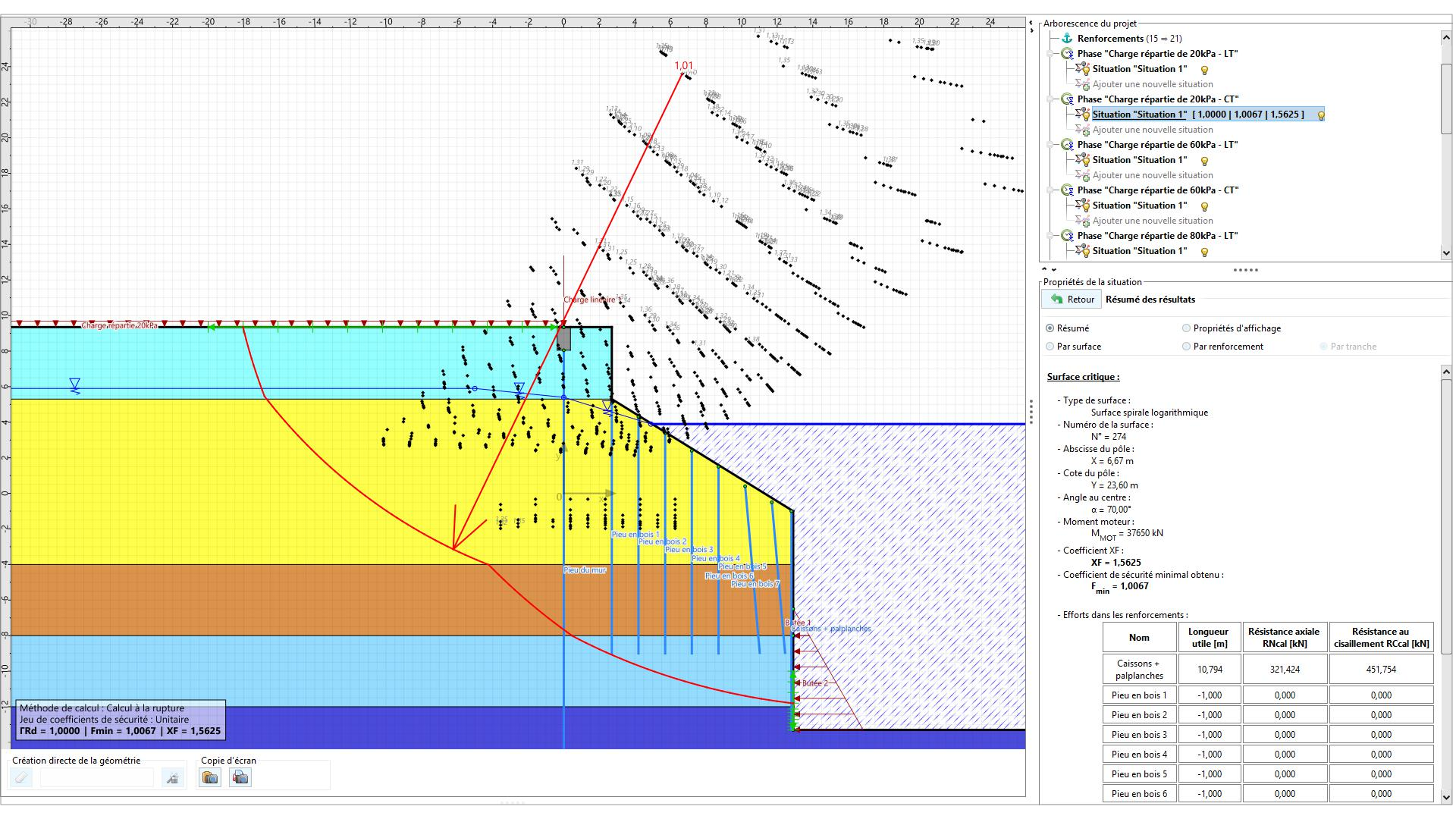
- Talren offers a user-friendly interface, both for data entry (with numerous wizards to help define input parameters) and for analysing results
- Comprehensive phase management: verification of all phases and scenarios of a project within a single file
- The drawing area allows you to manipulate elements such as soil layers, the water table, overburden, reinforcement, etc.
- Implementation of proven calculation methods using a calculation engine validated over more than 25 years
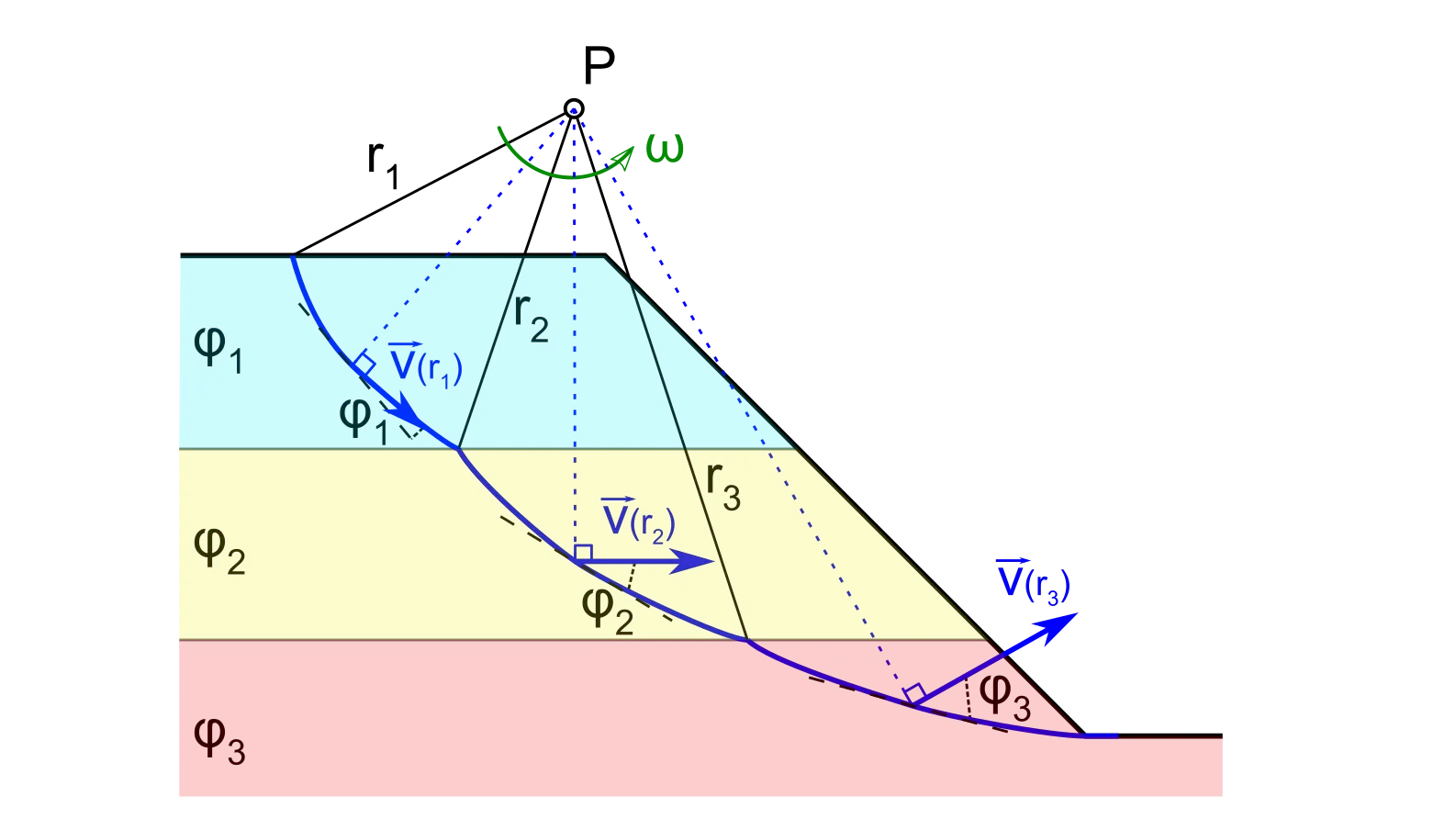
- Integration of the kinematic failure analysis method, enabling us to go beyond the limitations of traditional methods (slice methods)
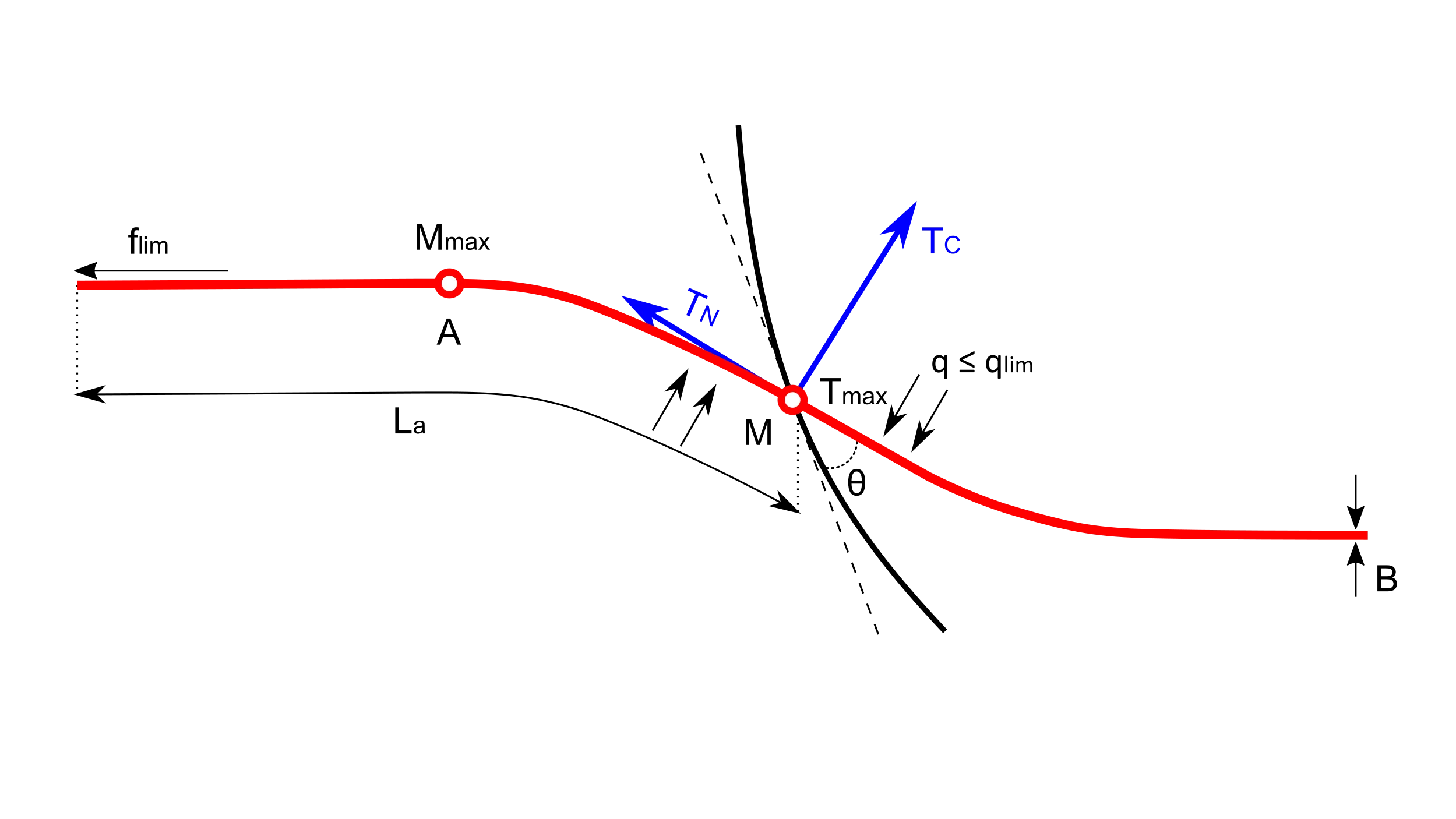
- Accounts for a comprehensive range of reinforcement elements: nails, rigid inclusions, tie rods, geogrids, struts, etc.
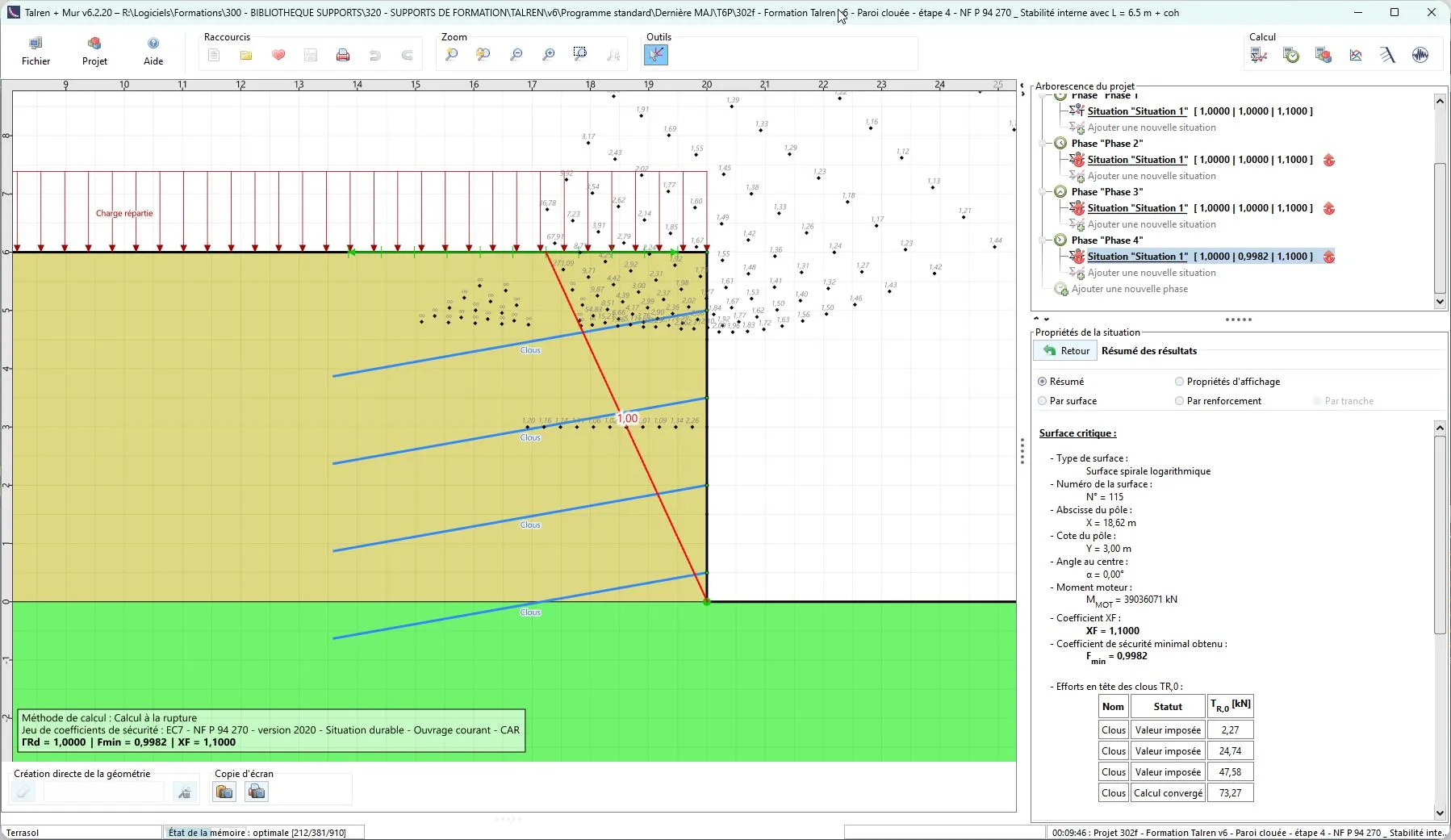
- Compatibility with the application standards of Eurocode 7 and, in particular, with the new NF P 94 270 standard of October 2020 for the design of soil-nailed walls and the NF P 94 281 standard for retaining walls
- Numerous interfaces with other software: links with Plaxis 2D (geometry, soil properties and pore pressure meshing), AutoCAD (geometry) and K-Réa v5 (export of soil limit pressure diagrams)
Modules
Wall
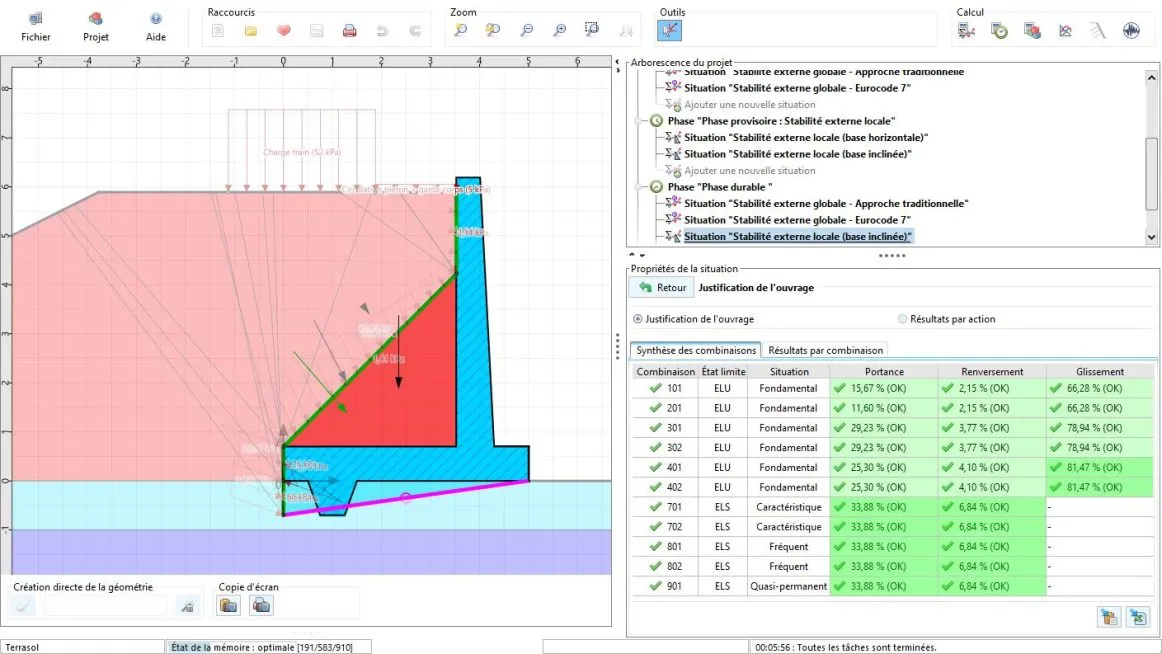
This paid module covers stability analyses specific to gravity walls, L-shaped walls, T-shaped walls and cellular walls, utilising the capabilities offered by the kinematic failure analysis method to determine the limit push/barrier diagrams for any soil layer configuration. The calculation is carried out in accordance with standard NF P 94-281, exploring the load combinations covered by the Eurocode.
- Analysis of global and local external stability within the same project
- Ability to process multiple walls simultaneously
- Calculation of thrust and bearing forces, taking into account overloads, reinforcements and settlements
- Load combination generator (NF P 94-281 and Eurocode 0)
- Detailed print report
Determination of limit thrusts/resists
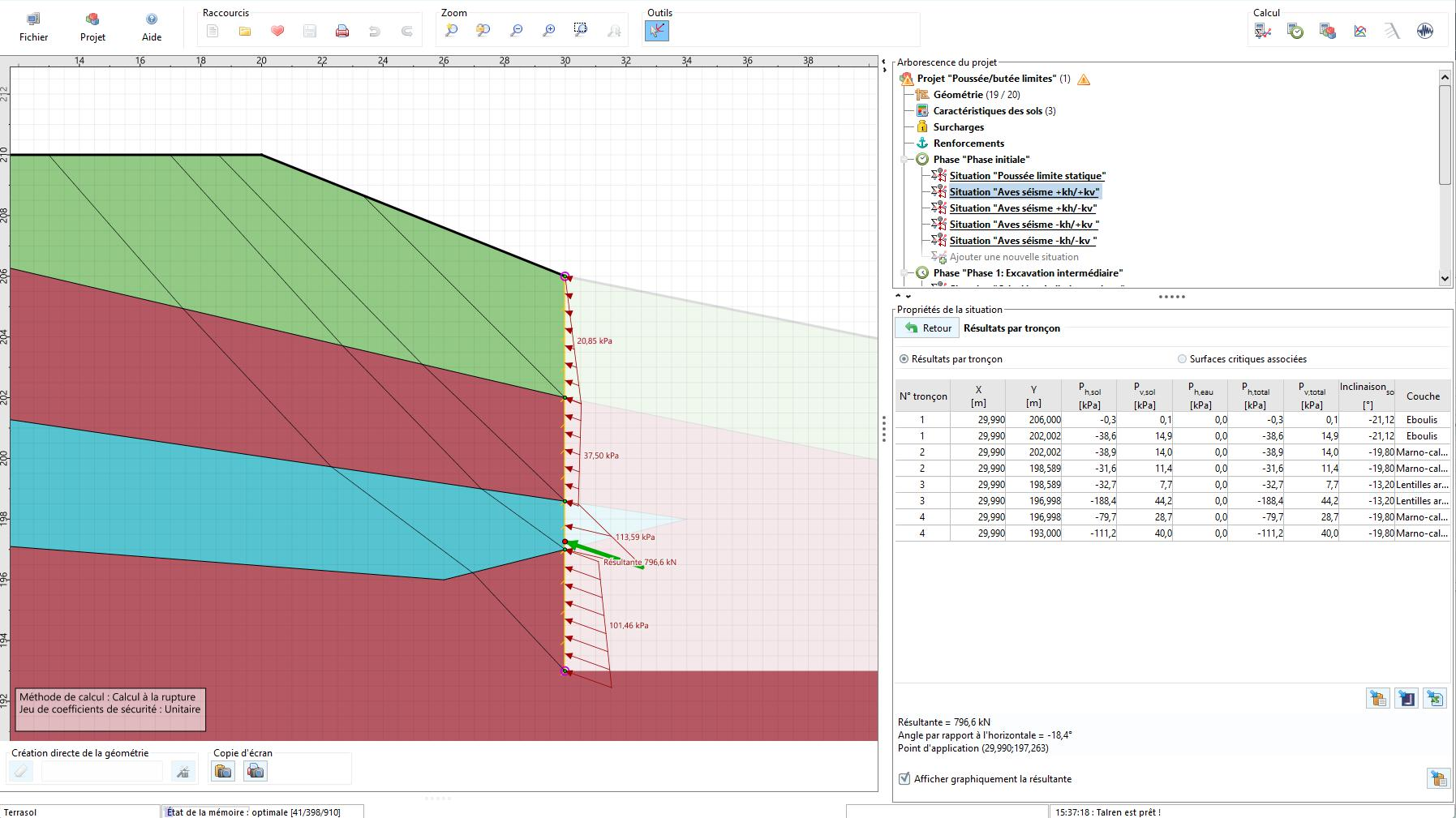
This module enables the determination of limit bearing capacity diagrams for a multi-layered soil subjected to any type of loading, including under potentially seismic conditions. In particular, it covers configurations not addressed by the standard solutions found in the literature, for example:
- Variable natural terrain (mountain slope, riverbank, etc.)
- Multiple localised loads
- Proximity to rock
- Soil reinforced with rigid inclusions
- Etc.
The direct interface with K-Réa allows these diagrams of ultimate thrust/abutment pressures to be used to feed into a retaining wall calculation.
Piles
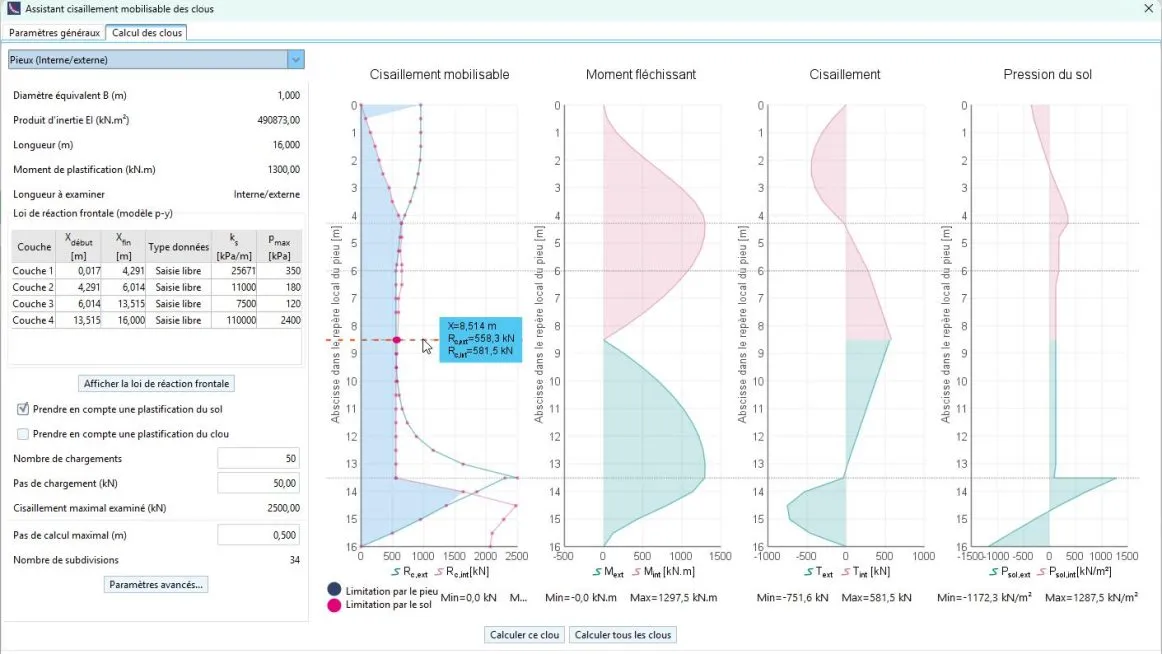
This module allows for a more detailed estimation of the load-bearing contribution along a ‘nail’-type reinforcement element, such as a pile, an inclusion or a bar, subjected to bending and shear.
The calculation is based on a ‘p-y’ type elastoplastic model (as in the Piecoef module of Foxta), taking into account the multi-layered nature of the ground and soil plasticisation.
In practical terms, the result is a diagram of the shear stress that can be mobilised along the reinforcement, limited either by the soil’s capacity or by the reinforcement element’s own capacity (the module specifies which element is the limiting factor).
Flow
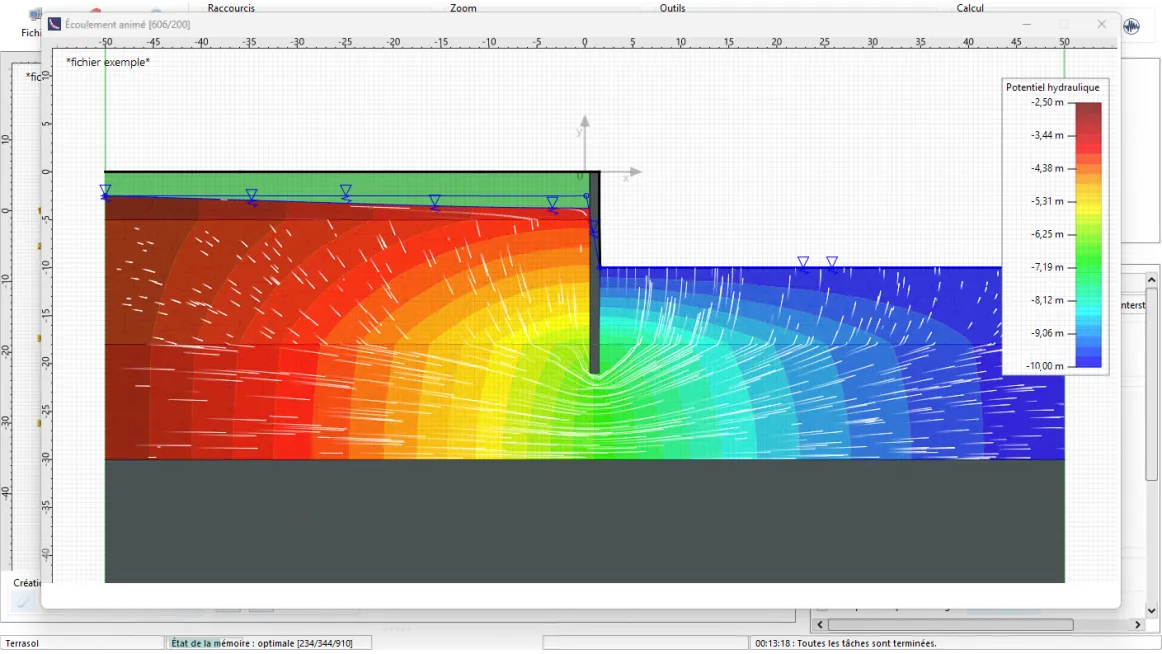
This module enables an integrated calculation, under steady-state and permanent conditions, of the pore pressure field to be considered for stability analyses.
The calculation is based on a numerical solution of Laplace’s equation, taking into account the multilayer and anisotropic nature of the ground.
Once the horizontal/vertical permeabilities and boundary conditions have been entered, it is possible to access the pore pressure and/or potential field, as well as the flow display.
Parameter sensitivity analysis
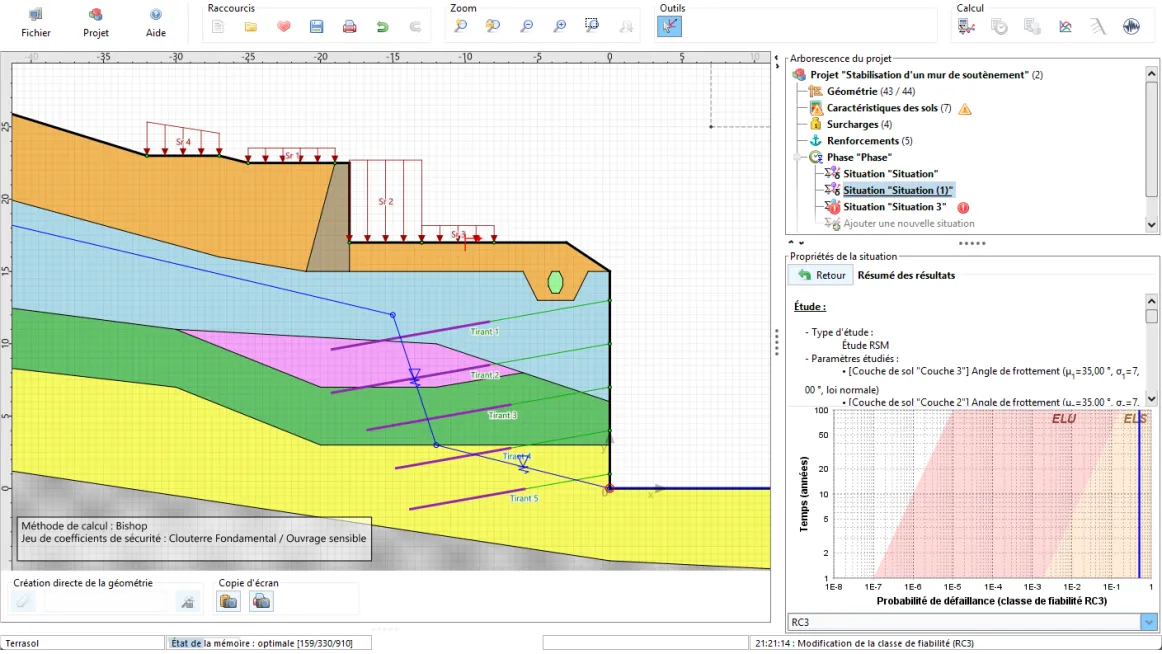
This module offers the ability to automatically perform sensitivity analyses to assess the influence of various model parameters on the stability of the structure under investigation.
It is also possible to carry out a reliability analysis, which involves quantifying safety in terms of a reliability index or probability of failure (analysis based on the RSM method).
Earthquake
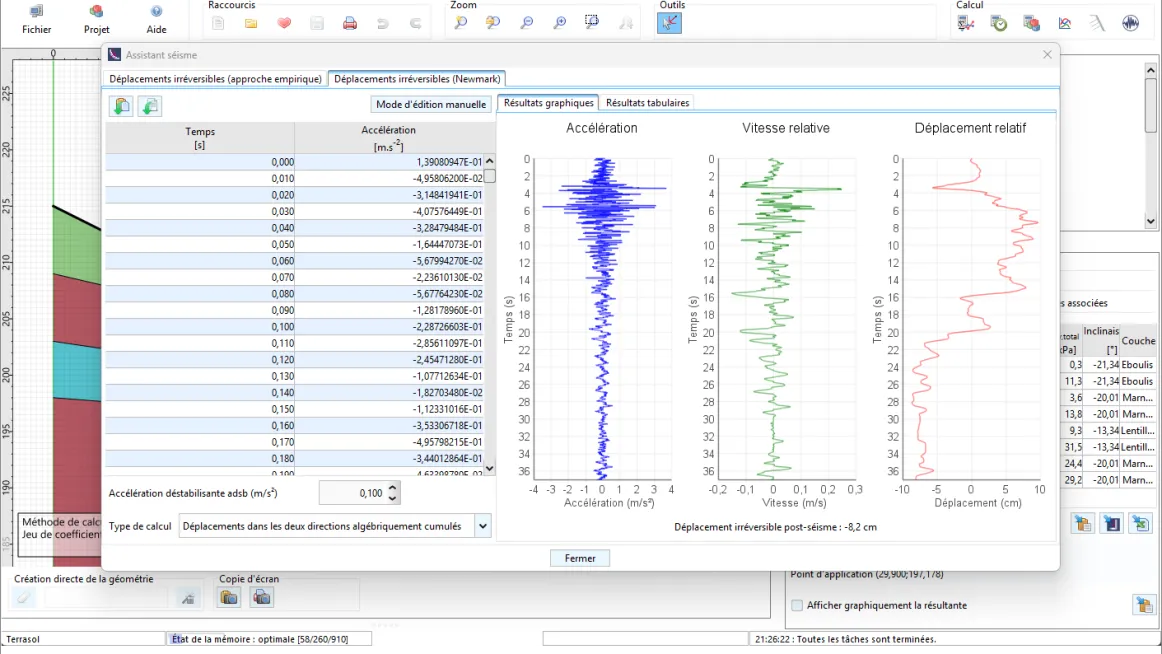
The seismic module enables the automatic determination of the destabilising seismic acceleration (that leading to the limit state) which can be used as input data for a ‘Earthquake’ wizard integrated into the software. This wizard enables the empirical or analytical calculation of post-earthquake irreversible displacements (Newmark-type model).

Fancy giving it a go?
Get a free 30-day trial licence (non-renewable) allowing you to use all the software’s features, run all calculations and view the results.