Rock face stabilisation
The Guiana Space Centre, based in Kourou, has begun construction of a new Launch Complex (ELA4), designed for the future Ariane 6 launcher.
The site is located in an outcrop area of the Guiana Craton, composed of granitic and gneissic rocks.
The launch pad infrastructure (in particular the installation of the ‘deluge’ system to divert gases from propellant combustion) required the creation of a crater over 30 metres deep.
This required extensive rock excavation, creating high rock slopes, at the foot of which a civil engineering site was established, necessitating temporary shoring of the walls.
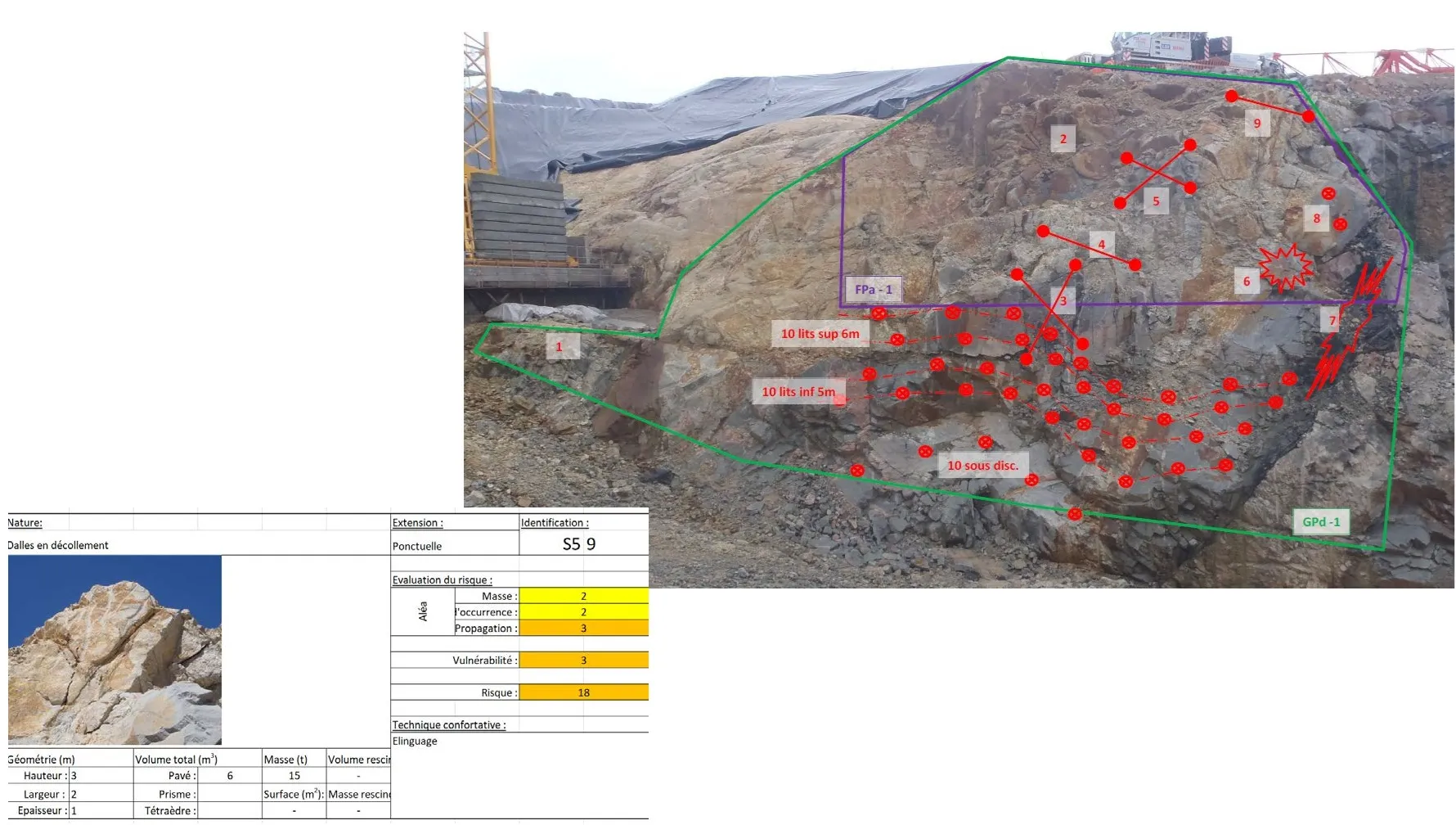
TERRASOL was commissioned to carry out a survey of all the rock faces, producing data sheets for each of the individual blocks identified. The blocks are identified by their position, volume and estimated probability of failure (fracturing).
Terrasol then proposed and designed a support system tailored to the size of the blocks with uncertain stability:
- anchoring for massive blocks weighing several tonnes
- belting for heavily fractured rock masses
- mesh for small volumes of a few kilograms or nets for medium-sized volumes up to a few hundred kilograms, distributed across the face
- drains for intermediate and isolated volumes
The stabilisation principles utilised active techniques (stabilising the hazard in situ), as the areas at the base had to be fully available for the civil engineering works.
These stabilisation works enabled the launch pad works to proceed smoothly.
Partner
Eiffage
Client
CNES
Project manager
Ariane Espace
Key figures
New Launch Complex for Ariane 6 – Launch Pad